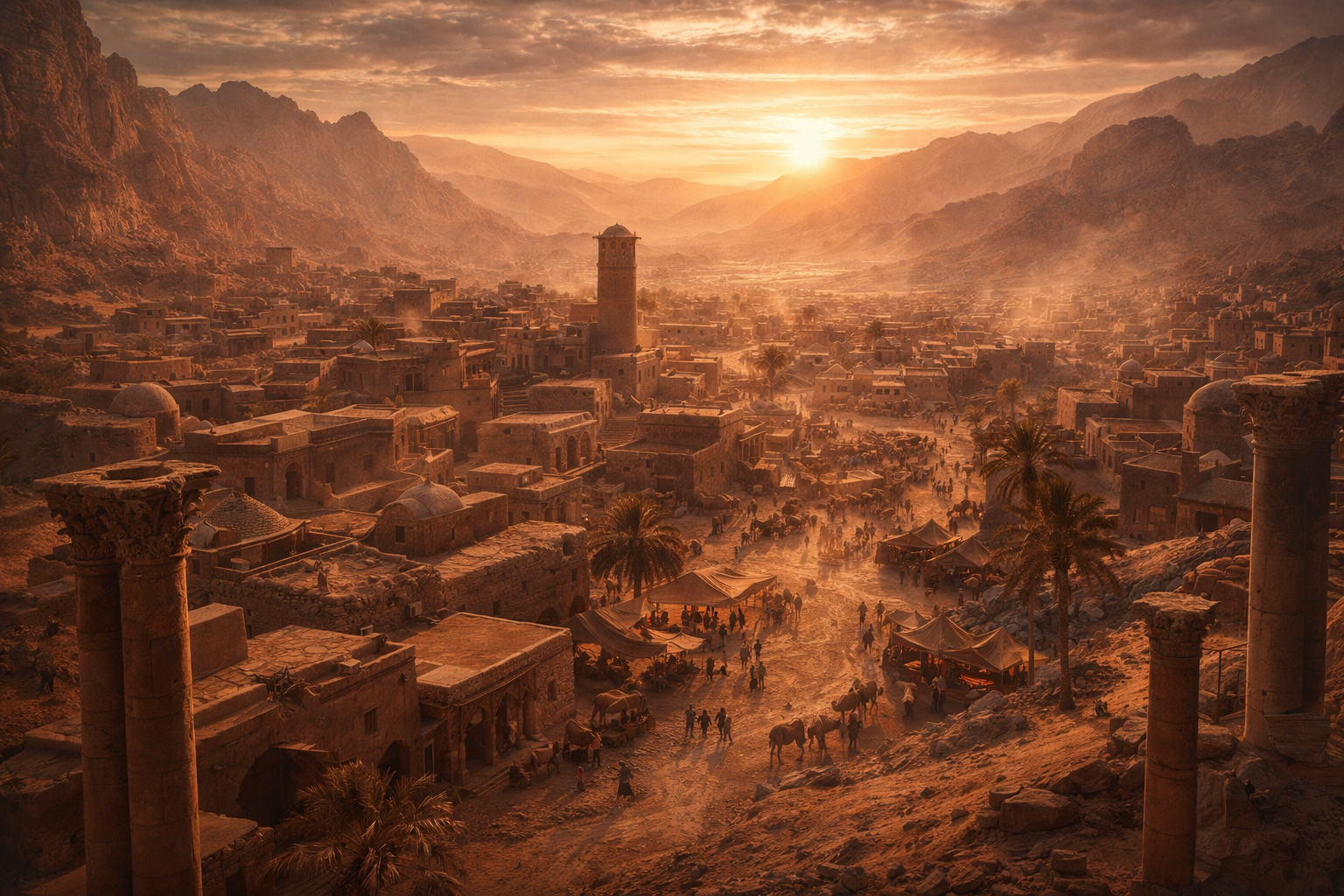
The Midianites and the People of Aykah: Descendants of Abraham through Keturah.
The Midianites and the People of Aykah.
Abstract
The Qur’anic narratives concerning the people of Midian (Madyan) and the people of Aykah have long been the subject of exegetical discussion. Classical Muslim commentators differed on whether these two groups were identical or distinct. Drawing upon Qur’anic evidence, classical tafsīr, biblical genealogies, and medieval geographical works, this article argues that the Midianites and the people of Aykah were distinct tribal entities descending from a common Abrahamic stock, namely the children of Abraham through his third wife Keturah. This conclusion reconciles apparently divergent exegetical opinions and situates both groups within a broader historical and geographical framework.
1. Qur’anic References to the People of Midian and Aykah
The Qur’an mentions the people of Midian explicitly in several passages, notably:
- Surah al-Aʿrāf (7:85) – where Prophet Shuʿayb is described as “their brother”
- Surah Hūd (11:84–95) – detailing their economic corruption and punishment
The people of Aykah, by contrast, are mentioned in:
- Surah al-Ḥijr (15:78–84)
- Surah al-Shuʿarāʾ (26:176–191)
In Surah al-Shuʿarāʾ, Shuʿayb is sent to the people of Aykah, yet he is not called their brother, a linguistic distinction that became a central point of exegetical debate.
2. Classical Exegetical Debate
Classical Qur’anic commentators developed two main positions:
- Distinct Peoples View
Some exegetes argued that Midian and Aykah were separate tribes, pointing to the Qur’anic wording: Shuʿayb is explicitly called “brother of Midian” (7:85) but not the brother of Aykah (26:177). This linguistic distinction suggested different ethnic or tribal identities. - Single People View
Others held that Midian and Aykah were the same people known by different names. They argued that: - The moral transgressions described are identical
- Shuʿayb’s message is the same
- The divine punishment is described in similar terms
Both views were transmitted within early tafsīr literature.
3. Reconciling the Views: A Common Abrahamic Origin
Historical and genealogical research supports a reconciliatory conclusion:
The Midianites and the people of Aykah were distinct tribes but belonged to the same Abrahamic stock.
According to Islamic tradition and biblical genealogy, Abraham had several sons through Keturah after Sarah’s death:
“Abraham took another wife, whose name was Keturah… She bore him Zimran, Jokshan, Medan, Midian, Ishbak, and Shuah.”
— Genesis 25:1–2
Islamic historians identify these descendants collectively as Banū Keturah (the children of Keturah). Among them, Midian emerged as the most prominent lineage.
4. The Midianites: Lineage and Geography
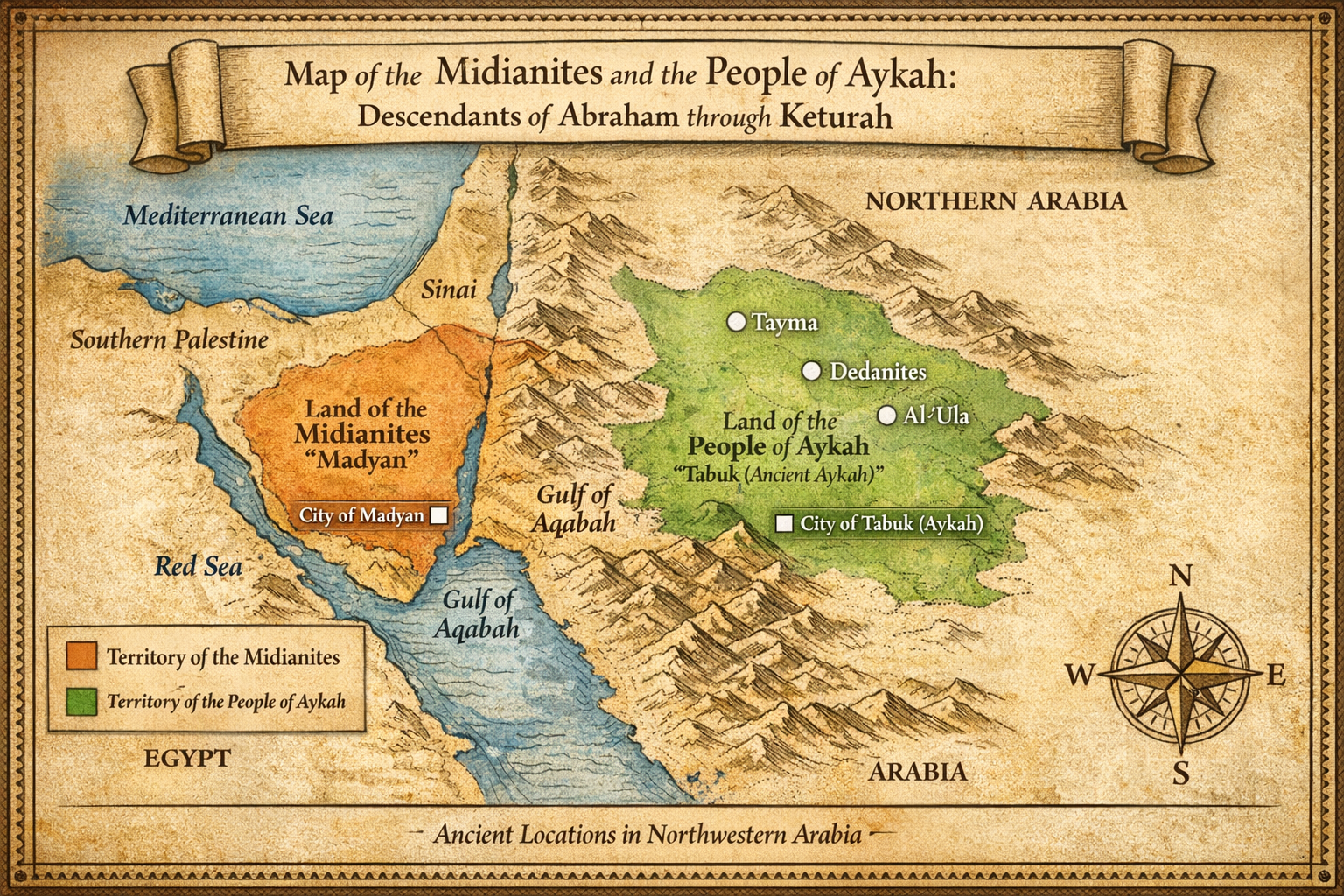
The Midianites traced their ancestry to Midian ibn Abraham. They occupied a strategically important region:
- Between northern Arabia and southern Palestine
- Along the Red Sea coast and the Gulf of Aqabah
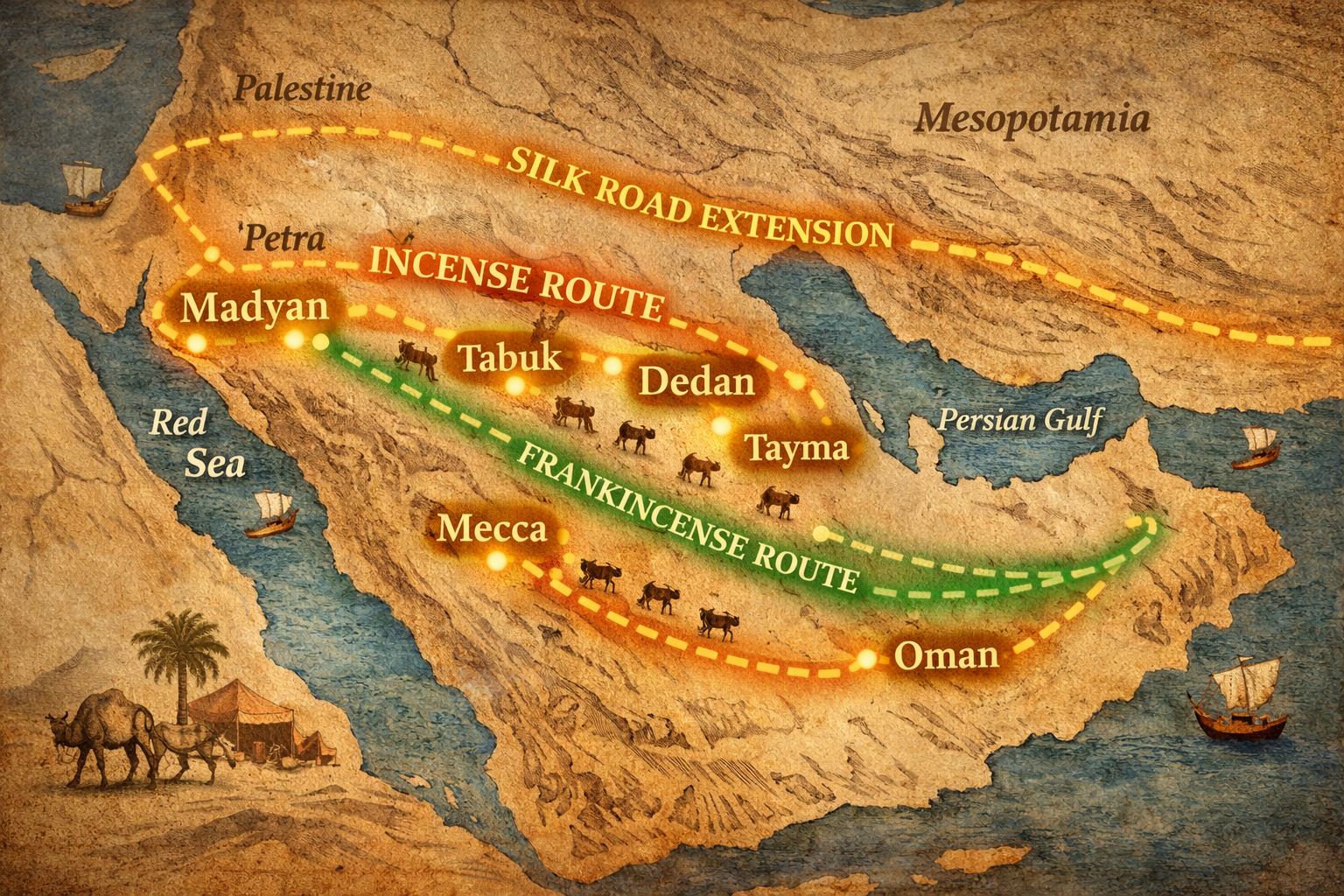
Medieval geographer Abū al-Fidāʾ (d. 732 AH) states that the city of Madyan was located on the western coast of the Gulf of Aqabah, approximately five days’ journey from Aykah.
(Abū al-Fidāʾ, Taqwīm al-Buldān)
This city served as the political and commercial center of the Midianites.
5. The People of Aykah and the Other Children of Keturah
Other branches of Keturah’s descendants, including the Dedanites, settled further east in northern Arabia. Their territory extended between:
- Taymāʾ
- Tabūk
- al-ʿUlā
The principal city of this region was Tabūk, which ancient sources identify as Aykah.
The renowned geographer Yāqūt al-Ḥamawī (d. 626 AH) writes:
“Aykah is the ancient name of Tabūk.”
— Muʿjam al-Buldān, entry under “Aykah”
He further notes that the inhabitants of Tabūk themselves preserved this identification through local tradition.
6. Why Shuʿayb Was Not Called Their “Brother”
The Qur’anic distinction in terminology is thus explained:
- Shuʿayb was genealogically connected more directly with the Midianite branch, hence called their brother
- The people of Aykah, though related through Keturah, represented a parallel branch, justifying the omission of the fraternal designation
This nuance reflects Qur’anic precision rather than contradiction.
7. Conclusion
The Qur’anic narratives, when read alongside classical tafsīr, biblical genealogy, and medieval geography, indicate that:
- The Midianites and the people of Aykah were distinct tribal entities
- Both descended from Abraham through Keturah
- Their geographical separation corresponds to known ancient settlements
- Their shared moral decline explains the similarity of prophetic warnings and divine punishment
This synthesis affirms the historical depth and internal coherence of the Qur’anic account while reconciling classical scholarly disagreement.
Selected References
- The Qur’an: 7:85; 11:84–95; 15:78–84; 26:176–191
- Abul Aʿlā Maududi, Tafhīm al-Qurʾān
- Abū al-Fidāʾ, Taqwīm al-Buldān
- Yāqūt al-Ḥamawī, Muʿjam al-Buldān
- The Bible, Genesis 25:1–4